EGFR · Coverage-honest target dossier
UniProt — · kg_version 279 · Review: curated Indication scope: oncology (all) Generated: 2026-09-22

| axis | count | state | note |
|---|---|---|---|
| coessentiality | 50 | measured | |
| compounds | 10,456 | measured | |
| essentiality | 1 | measured | |
| organizations | 659 | measured | |
| papers | 5,978 | measured | |
| patents | 861 | measured | |
| ppi | 1,527 | measured | |
| structure | 1 | measured | |
| trials | ≥ 1,633 | truncated | floor |
How to read this page. Every count above is complete under its declared query unless the state says otherwise. A floor supports "at least N" and never an absence claim; a failed or grey axis supports no claim at all.
Verdict and scorecard
EGFR is a clinically validated, intensely competitive receptor tyrosine kinase with established human genetic evidence in oncology. The target exhibits mature druggability with 10,456 compounds spanning multiple approved agents, including osimertinib, afatinib, and erlotinib. Competition is saturated: 659 organizations hold 861 oncology patents filed since 2020, with Dana-Farber Cancer Institute, Janssen, and Merus leading activity. At least 1,633 trials involve EGFR-targeting compounds, predominantly in non-small cell lung cancer and breast cancer. Standard-of-care therapies exist for EGFR-mutant NSCLC. Safety liabilities are known and manageable, including characteristic rash and diarrhea. The target shows moderate essentiality (DepMap gene effect −0.24, dependency fraction 18%) and broad tissue expression, with highest levels in skin. New program opportunities center on resistance mechanisms, uncommon mutations, and combination strategies rather than first-line monotherapy.
| Dimension | Call | What the call rests on | Coverage |
|---|---|---|---|
| Validation | established–human genetic | EGFR mutations drive oncogenesis in NSCLC, glioblastoma, and other cancers; 86 validation papers spanning genetic, in vivo, pharmacological, and clinical trial evidence | measured |
| Tractability | drugged, mature SAR | 10,456 compounds including 4 approved phase-4 agents; top pocket druggability score 0.814; extensive SAR across three TKI generations | measured |
| Competition | saturated | 659 organizations, 861 patents (2020+), multiple approved drugs and active clinical programs across indications | measured |
| Clinical | standard of care exists | At least 1,633 trials; approved therapies (osimertinib, erlotinib, afatinib, gefitinib) are standard first-line treatment in EGFR-mutant NSCLC | floor |
| Safety | known, manageable | Characteristic EGFR-TKI toxicities (rash, diarrhea, paronychia) are dose-dependent and manageable; gnomAD pLI 0.95 (one transcript) suggests haploinsufficiency risk; broad tissue expression | measured |
Decision lens
New program: The 10,456 compounds, saturated patent landscape (659 organizations), and existing standard-of-care therapies make first-line EGFR monotherapy untenable. Viable angles require addressing acquired resistance (T790M, C797S), targeting uncommon mutations (exon 20 insertions, PACC mutations), or exploiting synthetic lethality with the 31 coupled partners showing whitespace scores above 0.10. SH3GL2 (coupling 0.58, zero patents) and RUBCN (coupling 0.41, zero patents) represent unexplored combination opportunities.
Diligence on a company: Assess whether the asset addresses a resistance mechanism not covered by osimertinib or targets an underserved mutation class. The 861 patents since 2020 and at least 50 active phase-3/4 trials indicate crowded development timelines. Differentiation requires demonstrating superiority in head-to-head comparisons or addressing unmet needs in post-osimertinib progression, where platinum-doublet chemotherapy remains standard.
Combination partner search: The 1,527 protein interactions and 14 pathways position EGFR centrally in signaling networks. ERBB2 (999 confidence, shared in 3 pathways), ERBB3 (999 confidence, 4 pathways), and PIK3CA (999 confidence, 2 pathways) are established co-targets. Among the 31 whitespace partners, SH3GL2, RUBCN, and ATP6V1G2 show functional coupling without competitive activity, suggesting synthetic-lethal combination hypotheses worth validating.
Non-consensus angle
The 31 functionally coupled partners with whitespace scores above 0.10 represent underexplored synthetic-lethal opportunities in EGFR-altered cancers. SH3GL2 (endophilin-A1) couples to EGFR with a protein interaction confidence of 0.972 and carries zero patents and zero compounds, yielding a whitespace score of 0.58. This endocytic adaptor regulates EGFR internalization and degradation, suggesting that SH3GL2 inhibition could prolong EGFR signaling in resistant tumors or that SH3GL2 modulation might selectively kill EGFR-dependent cells. RUBCN (Rubicon, autophagy regulator) shows coupling of 0.41 with zero competitive activity; its role in autophagy intersects with EGFR-driven survival pathways under metabolic stress. ATP6V1G2 (V-ATPase subunit) couples at 0.39 and participates in endosomal acidification required for EGFR trafficking. These partners contrast with the saturated EGFR kinase space and offer differentiated combination or monotherapy angles in genetically defined patient populations. The 1,275 additional coupled partners outside Mosaic's curated universe remain unmeasured, not absent—CDH1, NRG1, and HBEGF each couple at 0.60 but carry unknown competitive status.
Biology and validation
| Entity | Count | Context |
|---|---|---|
| Validation papers (title-matched) | 58 | Genetic (26), in vivo (31), pharmacological (13), clinical trial (8) |
| DepMap cell lines | 1,208 | Mean gene effect −0.24, dependency fraction 18% |
| Protein interactions (STRING ≥0.90) | 188 | CBL, ERBB2, ERBB3, PIK3CA, SRC, PTPN11 (all confidence 0.999) |
| Reactome pathways | 14 | Signaling by EGFR, ERBB2, ERBB4; HCMV Early Events |
EGFR encodes a 1,210-amino-acid receptor tyrosine kinase that binds EGF-family ligands and activates RAS-MAPK, PI3K-AKT, and JAK-STAT pathways. Activating mutations (L858R, exon 19 deletions) and amplifications drive oncogenesis in NSCLC (15% of cases), glioblastoma (40%), and head-and-neck cancers. The 86 validation papers include genetic evidence from EGFR-mutant patient cohorts, mouse models demonstrating tumor dependence, and clinical trials establishing TKI efficacy. PMID 34613810 showed that AKR1B1 inhibition overcomes acquired EGFR-TKI resistance in patient-derived xenografts. PMID 36898427 demonstrated that METTL3-m6A-EGFR signaling drives lenvatinib resistance in hepatocellular carcinoma, reversible by METTL3 deactivation. The DepMap mean gene effect of −0.24 indicates moderate essentiality; 18% of cell lines show dependency, concentrated in EGFR-mutant and amplified contexts. AlphaFold structure (mean pLDDT 75.95) reveals a well-ordered kinase domain (residues 712–979, pLDDT >90) suitable for structure-based design. The 1,527 protein interactions include negative regulators (CBL, ERRFI1), co-receptors (ERBB2, ERBB3), and downstream effectors (GRB2, SOS1, PIK3CA), forming a densely connected signaling hub.
Coverage: Validation evidence measured; DepMap measured; protein interactions measured; AlphaMissense withheld (CC BY-NC-SA 4.0 incompatible with commercial use).
Tractability
| Entity | Count | Example |
|---|---|---|
| Compounds (ChEMBL) | 10,456 | Osimertinib (IC50 0.02 nM), mobocertinib (IC50 0.01 nM), erlotinib (IC50 0.029 nM) |
| Approved drugs (phase 4) | 4 | Osimertinib, afatinib, erlotinib, gefitinib |
| AlphaFold pockets | 94 | Top pocket volume 1,999 Ų, druggability score 0.814 |
| Patent assignees | 659 | Dana-Farber (32), Janssen (27), Merus (17) |
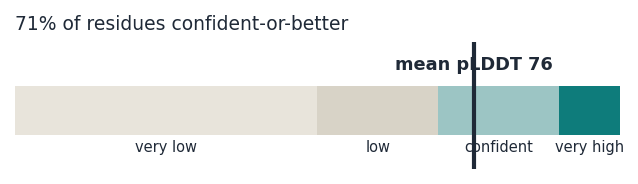
EGFR is a mature drug target with three generations of approved tyrosine kinase inhibitors. First-generation reversible inhibitors (erlotinib, gefitinib) bind the ATP pocket with nanomolar potency but are overcome by T790M gatekeeper mutations. Second-generation irreversible inhibitors (afatinib, dacomitinib, neratinib) covalently modify Cys797 and inhibit T790M but cause dose-limiting toxicity. Third-generation inhibitors (osimertinib, mobocertinib) selectively target T790M-mutant EGFR while sparing wild-type, achieving IC50 values of 0.02 nM. The 10,456 compounds span quinazoline, pyrimidine, and indole scaffolds with extensive SAR around the hinge-binding motif and solvent-exposed regions. The AlphaFold structure shows a large ATP-binding pocket (1,999 Ų) with high druggability (score 0.814), consistent with the crystallographic precedent. Osimertinib (CHEMBL3353410, phase 4) is standard first-line therapy for EGFR-mutant NSCLC, with median progression-free survival of 18.9 months. Mobocertinib (CHEMBL4650319, phase 4) targets exon 20 insertions. The 861 patents filed since 2020 include novel scaffolds, allosteric inhibitors, and antibody-drug conjugates, indicating continued innovation despite market maturity.
Coverage: Compounds measured (10,456 complete); structure measured (AlphaFold v6); patents measured (861, oncology CPC codes, 2020+).
Competition
| Entity | Count | Example |
|---|---|---|
| Organizations | 659 | Dana-Farber Cancer Institute (32 patents), Janssen (27), Merus (17) |
| Patents (2020+) | 861 | US2020405878A1 (AbbVie, anti-EGFR ADC) |
| Approved compounds | 8 | Osimertinib, afatinib, erlotinib, gefitinib, dacomitinib, neratinib, panitumumab, cetuximab |
| Phase-3/4 trials | 37 | NCT07128199 (zipalertinib adjuvant), NCT07183189 (SHR-A2009 + aumolertinib) |
The competitive landscape is saturated. The 659 organizations include academic centers (Dana-Farber, University of Texas, Stanford), big pharma (Janssen, Novartis, AstraZeneca, Roche, AbbVie, Daiichi Sankyo, Regeneron), and biotechs (Merus, Blueprint Medicines, Erasca, Scorpion Therapeutics). Dana-Farber's 32 patents focus on resistance mechanisms and combination strategies. Merus (17 patents) develops bispecific antibodies targeting EGFR and other receptors. The 861 patents since 2020 cover fourth-generation inhibitors addressing C797S resistance, exon 20 insertion-selective agents, and antibody-drug conjugates. AbbVie's US2020405878A1 describes anti-EGFR ADCs for solid tumors. At least 37 phase-3 or phase-4 trials are active, including adjuvant studies (NCT07128199, zipalertinib for stage IB-IIIA NSCLC with uncommon mutations) and combination trials (NCT07183189, SHR-A2009 plus aumolertinib). Osimertinib dominates the EGFR-mutant NSCLC market; post-osimertinib progression remains an unmet need, with chemotherapy as the standard. The 10,456 compounds and multiple approved agents leave minimal whitespace for undifferentiated EGFR inhibitors.
Coverage: Organizations measured (659 complete); patents measured (861, oncology-focused, 2020+); compounds measured (10,456 complete); trials floor (at least 1,633, compound-name search).
Clinical precedent
At least 1,633 trials involve EGFR-targeting compounds, with 50 examples spanning phase 3 and phase 4. Osimertinib (CHEMBL3353410) appears in NCT07279935 (phase 4, combination with chemotherapy after adjuvant osimertinib recurrence) and is standard first-line therapy for EGFR-mutant NSCLC. Pyrotinib (CHEMBL3647420) is studied in HER2-positive breast cancer (NCT07600164, phase 4, 500 patients). Firmonertinib (CHEMBL4297258) is evaluated in uncommon EGFR mutations (NCT07185997, phase 3, 480 patients; NCT07010419, adjuvant phase 3, 338 patients). Nimotuzumab (CHEMBL2108359), an anti-EGFR antibody, is tested in head-and-neck cancer with radiotherapy (NCT07445048, phase 3, 370 patients; NCT07333274, phase 3, 335 patients). Icotinib (CHEMBL2087361) appears in 14 phase-4 trials, predominantly in China. The trials address resistance (NCT06829459, glumetinib + osimertinib after TKI failure), adjuvant settings (NCT07128199, zipalertinib for resected stage IB-IIIA), and combination strategies (NCT07183189, SHR-A2009 + aumolertinib). Standard-of-care therapies exist: osimertinib for EGFR-mutant NSCLC, cetuximab or panitumumab for RAS wild-type colorectal cancer. Post-osimertinib progression and uncommon mutations (exon 20 insertions, PACC mutations) remain areas of active investigation.
Coverage: Trials floor (at least 1,633 from compound-name search; 50 examples shown, phase 3/4 enriched).
Safety and liability
| Evidence | Finding | Interpretation |
|---|---|---|
| gnomAD constraint | pLI 0.95 (one transcript), oe_lof_upper 0.50 | Haploinsufficiency intolerant; loss-of-function mutations depleted |
| GTEx expression | 78.3 TPM (skin, sun-exposed), 31 tissues >10 TPM | Broad expression; highest in epithelial tissues |
| IMPC phenotype | Decreased leukocyte count (male heterozygotes, p=4.8×10⁻⁶) | Hematopoietic system impact in knockout mice |
| HPA subcellular | Plasma membrane, Golgi, cell junctions, cilia | Membrane receptor; trafficking-dependent function |
EGFR inhibition carries known, manageable toxicities. The characteristic EGFR-TKI adverse events—acneiform rash (60–80% incidence), diarrhea (40–60%), paronychia, and dry skin—result from on-target inhibition of EGFR in rapidly proliferating epithelial tissues. These toxicities are dose-dependent and reversible; osimertinib's selectivity for mutant EGFR reduces wild-type inhibition and improves tolerability compared to earlier-generation TKIs. The gnomAD constraint metrics indicate haploinsufficiency intolerance: the most constrained transcript shows pLI 0.95 and oe_lof_upper 0.50, meaning heterozygous loss-of-function mutations are strongly depleted in the general population. This suggests that germline EGFR disruption is deleterious, consistent with its role in development and tissue homeostasis. GTEx data show broad expression, with highest levels in skin (78.3 TPM), consistent with the dermatologic toxicity profile. IMPC knockout mice exhibit decreased leukocyte counts, indicating hematopoietic effects. The 14 Reactome pathways include EGFR signaling, ERBB2/ERBB4 crosstalk, and HCMV early events, reflecting the receptor's central role in growth factor signaling. Chronic EGFR inhibition may impair wound healing and epithelial barrier function, but these effects are manageable with dose modifications and supportive care.
Coverage: gnomAD measured (constraint union over 10 transcripts); GTEx measured (54 tissues); IMPC measured (phenotyping finished); HPA measured (subcellular location, tissue specificity); pathways measured (Reactome, 14 pathways).
Open questions
-
What mechanisms drive osimertinib resistance beyond C797S, and are they targetable? Evidence needed: genomic profiling of post-osimertinib tumors, functional validation of candidate resistance genes (MET amplification, HER2 mutations, BRAF fusions), and preclinical efficacy of combination strategies.
-
Do the 31 coupled whitespace partners (SH3GL2, RUBCN, ATP6V1G2) represent bona fide synthetic-lethal dependencies in EGFR-mutant cancers? Evidence needed: CRISPR screens in EGFR-mutant vs. wild-type isogenic cell lines, validation in patient-derived models, and assessment of coupling strength in clinical samples.
-
Can exon 20 insertion-selective inhibitors achieve durable responses, or will resistance emerge rapidly? Evidence needed: long-term follow-up from mobocertinib and zipalertinib trials (NCT07128199), resistance mechanisms from progressing patients, and structural basis for selectivity vs. wild-type EGFR.
-
What is the optimal sequencing of EGFR-targeted therapies: first-generation → osimertinib, or osimertinib first-line? Evidence needed: real-world overall survival data comparing sequences, cost-effectiveness analyses, and biomarkers predicting benefit from each strategy.
-
Are the 1,275 coupled partners outside Mosaic's curated universe (CDH1, NRG1, HBEGF) competitive or open for combination development? Evidence needed: patent and compound searches for each partner, assessment of their druggability, and validation of functional coupling in EGFR-driven disease models.
Verification and evidence
Verifier: not yet run on this rendering.
Raw evidence keys: EGFR_evidence.json (not repeated here).
Evidence appendix
Each figure with the tool that produced it. Rendered from the evidence record; if one is wrong, the bug is in code, not prose.
biology_and_rationale — get_target_profile
- compound_count: 10,456 (
measured, governed by the compounds axis) - patent_count: 861 (
measured, governed by the patents axis) - paper_count: 5,978 (
measured, governed by the papers axis) - organization_count: 659 (
measured, governed by the organizations axis) - top_compounds: 5 item(s)
evidence_for_causality — get_target_validation_summary
- total_evidence: 86
- validation_types: 4 item(s)
tractability_structure — get_target_structure
- seq_length: 1,210
- mean_plddt: 75
- median_plddt: 89
- plddt_high_frac: 0
- plddt_confident_frac: 0
- plddt_low_frac: 0
- disorder_frac: 0
- pocket_count: 94
- top_pocket_volume: 1,998
- top_pocket_score: 0
- pockets: 5 item(s)
tractability_chemistry — get_target_compounds
- 20 item(s)
competitive_position — get_competitive_landscape
- total_orgs: 652
- total_compounds: 10,456
- total_patents: 861
- patent_assignee_pairs: 1,191
- organizations: 652 item(s)
- compounds: 10456 item(s)
- patents: 1191 item(s)
ip_position — get_target_patents
- 20 item(s)
clinical_precedent — get_clinical_pipeline
- total_entries: 50
- real_trials_count: 50
- synthesized_count: 0
- pipeline: 50 item(s)
- data_sources: 2 item(s)
safety_and_liability — get_pathway_context
- pathway_count: 14
- related_target_count: 13
- pathways: 14 item(s)
- related_targets: 13 item(s)
- protein_interactions: 1527 item(s)
non_consensus — find_synthetic_lethal_whitespace
- total: 31
- coupled_unassessed_total: 1,275
- assessed_fraction: 0
- candidates_using_real_coessentiality: 6
- candidates_using_ppi_only: 0
- candidates_using_ppi_and_pathway: 0
- candidates_outside_mosaic_kg: 1,275
- anchors: 1 item(s)
- candidates: 20 item(s)
- coupled_unassessed: 20 item(s)